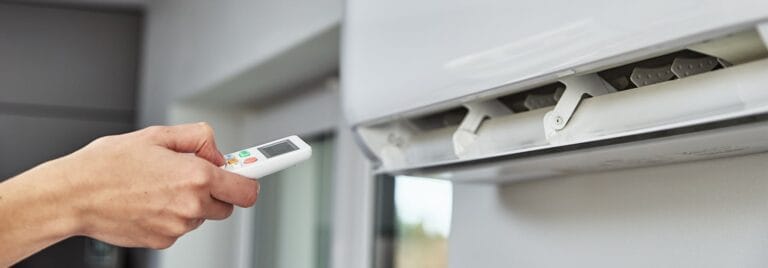
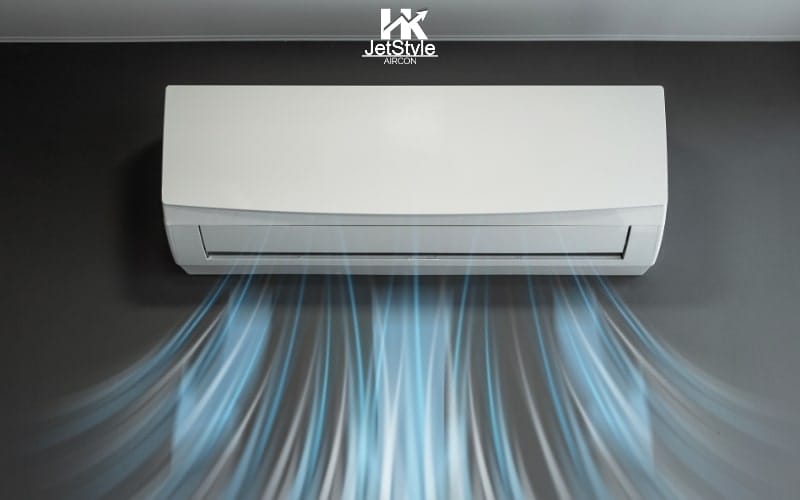
With Singapore’s humid weather January through to December, we all know that an aircon is a non negotiable. What should also be a non negotiable is an aircon unit that performs well and continues to keep your home nice and cool. For many homeowners, an aircon can start playing up and feeling like it’s not as cold as it used to be. Generally, it’s due to lack of maintenance. If you are unsure how often you should service an aircon, it usually means you’re overdue.
The following are some possible reasons why your aircon unit is not cold:
1. Clogged air filter
A clogged air filter filled with dust and debris can reduce air circulation in the room. This disrupts the air conditioner’s cooling system as it requires more energy and time to reach optimal temperature levels.
2. Clogged Fan Coil Unit (FCU)
All air conditioners are integrated with an FCU, which consists of a blower fan and an evaporator coil to help recirculate the air. The blower air’s function is to collect the surrounding air, flowing it over to the evaporator coil. This determines whether cool or hot air will be circulated in the room.
However, if both the blower fan and evaporator coil are obstructed by mould and dust, airflow may be limited, reducing cool air circulation in the room – requiring immediate aircon cleaning or removal.
3. Blocked condenser unit evaporator coil
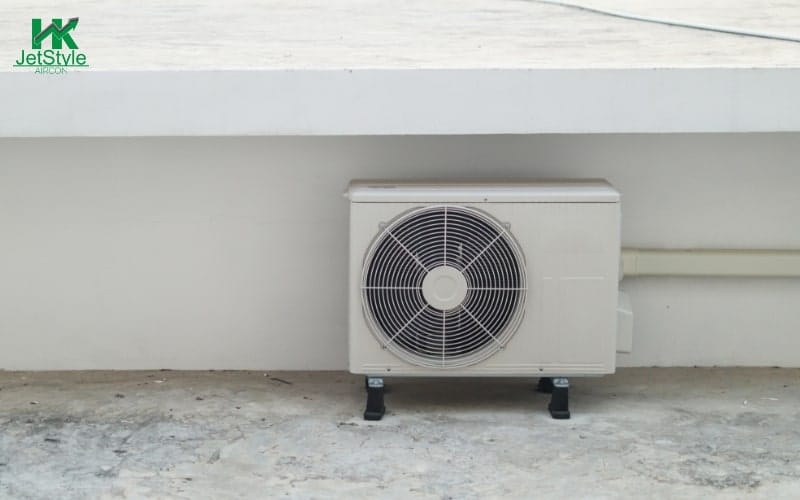
In an aircon unit, the condenser and compressor work in harmony to cool the room.
The following steps depict how the condenser and compressors function as a whole:
- Compressor exerts pressure on a working fluid called refrigerant which will transform from its gaseous state to its hot liquid state.
- This hot refrigerant passes through the coils of the condenser to cool its liquid state under pressure.
- This cool refrigerant leaves the condenser by a value to transform the liquid state into a gaseous state and travels up to the evaporator coil.
- The evaporator coil will cool the gaseous refrigerant to the desired temperature before circulating the room.
However, if the condenser becomes blocked by dirt, the refrigerant cannot discharge its heat and will remain in its hot state as it moves over to the evaporator coil.
4. Aircon coolant leaking
Found in the interior coils of the air conditioner, an aircon coolant has the ability to vaporise the liquid refrigerant and cool the surrounding area. Ideally, the refrigerant in the coils should maintain its temperature at around 40 degrees celsius. Otherwise, the coils will start to freeze, continuously building up ice in the aircon unit.
Hire experienced technicians for your aircon servicing to evaluate the source of the problem before fixing anything.
5. Malfunctioning thermistor sensor
For an air conditioner to reach its optimum temperature, a cooling coil thermistor sensor is required to determine if the temperature is cooled. Once it has reached the ideal temperature, signals will be sent to the control unit for proper adjustment.
However, if the thermistor sensor becomes faulty, regulating the cooling system effectively becomes a challenge, thus forming fluctuations in the temperature.
6. Faulty compressor
As mentioned earlier, the compressor exerts pressure to remove heat and condense refrigerated gas. This, in turn, generates more heat, which may lead to overheating issues and ultimately, system failure.
In the event your air conditioner breaks down, it is recommended to send your aircon for repairs. Our experts have the necessary skills to examine and fix the issue.
7. Incorrect Mode Settings
If lowering the temperature of your aircon makes no difference and still does not cool the room, it could be due to the mode you’ve got it set to. If it’s set to heat instead of cool (even with a lower temperature), it will not cool efficiently. Make sure it’s set to cooling. Once the desired temperature is achieved, the compressor will automatically turn off as the fan circulates cold air.
8. Aircon Horsepower (BTU) Undersized
The British Thermal Unit (BTU) determines the energy required to cool a room – aircons rely on the BTU to remove heat efficiently. The more BTU an aircon unit has, the more efficient it is in reaching optimal temperature (faster).
However, if a smaller aircon is placed in a larger room, more BTU will be required, potentially leading to overheating. This will result in the aircon just not cooling the room down.
9. Faulty spare parts
Expansion valve jammed
The expansion valve is reliant on pressure and adjusts temperature accordingly. The valve can get jammed when dirt and bacteria clogs the system. This results in an insufficient supply of refrigerant, which increases the pressure in the compressor to produce more refrigerant, and overheating the system (causing hot air, not cool air).
Busted fan motor
The aircon fan plays a vital role, blowing hot air out of the house and allowing cool air to filter in. However, an overheated or a short-circuited motor makes it difficult to transport cold air over.
Printed circuit board (PCB) Malfunctioning
The PCB is designed to connect various components to perform communications, execute a specific command or compute the output required to control the air conditioner. However, they are very sensitive to electrostatic discharge (ESD), which can damage the PCB components and result in a faulty aircon.
Above are some of the many reasons why your aircon may not be achieving optimal temperatures. Should you require aircon repair, the professionals at Jetstyle Aircon will diagnose your system to identify conditions before deciding the best solution.
With over 10 years of experience in cutting-edge high-pressure cleaning technology, we offer aircon servicing, cleaning, repair and maintenance all within the same day. Contact us to get any of your aircon needs settled!